Aging. Photo by OpenStax Anatomy and Physiology via Wikimedia Commons.
Highlights
- Age shapes how these infections appear.
- The first 10 days define disease patterns.
- Blood markers vary by virus and age.
- Tracking symptoms over time improves diagnosis.
One of the most powerful aspects of the 18-year pediatric cohort study by Carrillo et al. published in The Lancet Child & Adolescent Health was its ability to track how clinical features evolve by age and over the course of illness.
Children aged 2 to <18 years from 2006 to 2023 were included, allowing researchers to see how symptoms of dengue, chikungunya, and Zika shift with both age and days since symptom onset.
Across diseases, some features were age-dependent.
For example, basophilia, a rise in a specific blood cell type called basophils, remained constant across ages for dengue, whereas it tended to decline with age in chikungunya and Zika.
Likewise, rash patterns varied with age: chikungunya rash decreased from ages 2–10 before rising again, while Zika rash patterns shifted differently across childhood and adolescence.
Why the First 10 Days of Illness Matter for Dengue, Chikungunya, and Zika
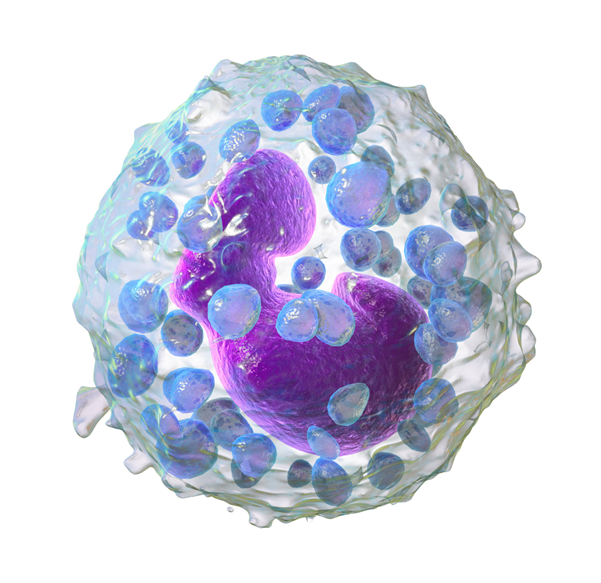
Representation of a basophil. Photo by Blausen Medical via Wikimedia Commons.
Dengue and chikungunya had similar fever dynamics, often peaking early and gradually declining.
On the other hand, Zika patients tended to have lower mean temperatures throughout.
These temporal patterns offer clues to differential diagnosis and could help frontline clinicians anticipate disease course and escalation risk.
The study’s analytic approach also revealed which features are most distinctive when looked at dynamically rather than statically.
For example, persistent arthralgia (joint pain) early in illness was highly predictive of chikungunya, whereas early leukopenia (low white blood cells) and basophilia (high amount of basophil cells) were more indicative of dengue.
What This Means

Managua, Nicaragua. Photo by randreu via Wikimedia Commons.
This long-term pediatric study from Nicaragua shows that dengue, chikungunya, and Zika do not look the same across childhood, or across the days of illness.
Symptoms change with age and time since onset, and those shifts matter for diagnosis.
Some clues are age-dependent. Certain blood markers, like basophils, stay relatively stable across ages in dengue but change as children get older in chikungunya and Zika.
Skin rashes also follow different age patterns depending on the virus. This means a symptom that is common in younger children may fade or reappear later in adolescence.
Timing is just as important. Fever patterns differ over the first 10 days of illness, with dengue and chikungunya peaking early, while Zika tends to cause milder temperatures throughout.
When symptoms are tracked dynamically rather than at a single time point, clear distinctions emerge.
Early, persistent joint pain strongly points to chikungunya, while early drops in white blood cells combined with specific immune cell changes point toward dengue.
Together, these findings show that static checklists miss critical diagnostic information.
Age and symptom trajectory tell a much more accurate story.
Take Action

Photo by DigiGal DZiner via Wikimedia Commons.
Dengue, chikungunya, and Zika don’t follow simple rules, and neither should how we understand them.
Pathogenos turns real infectious disease research into clear, actionable insights for clinicians, researchers, and public health–minded readers.
Subscribe to get evidence-based breakdowns of new studies, early diagnostic signals that matter, and clear explanations without hype or misinformation, so you can stay informed before outbreaks are obvious.