
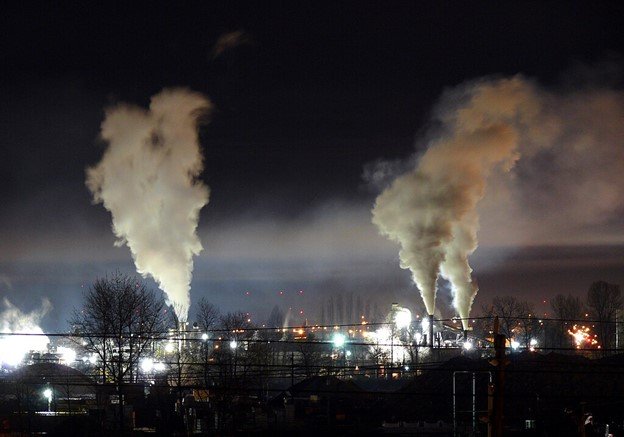
Source: Uxud via Wikimedia Commons.
Climate change is rapidly reshaping the global landscape of vector-borne diseases, and dengue is one of the most vulnerable. As temperatures, rainfall, and humidity rise, the conditions that fuel Aedes aegypti mosquito survival and virus transmission become more favorable, driving sharp increases in dengue risk.
Today, dengue causes an estimated 390 million infections per year, including more than 54 million cases across Latin America and the Caribbean.Yet most earlier predictions of climate-driven dengue risk relied on outdated, low-resolution models that overlooked how complex climate patterns affect real-world transmission.
In this blog, we go over how the new research by Colón-González et al. fills this gap by using high-resolution climate projections and multi-scenario modeling to measure how future warming levels (1.5 °C, 2 °C, and 3.7 °C) could reshape dengue transmission in Brazil, Colombia, and Mexico.
Their findings make one thing clear: strong climate-mitigation policies are not just environmental priorities, they are vital public health protections for a region already facing one of the world’s highest dengue burdens.
Table of Contents
Modeling Dengue Risk in Latin America
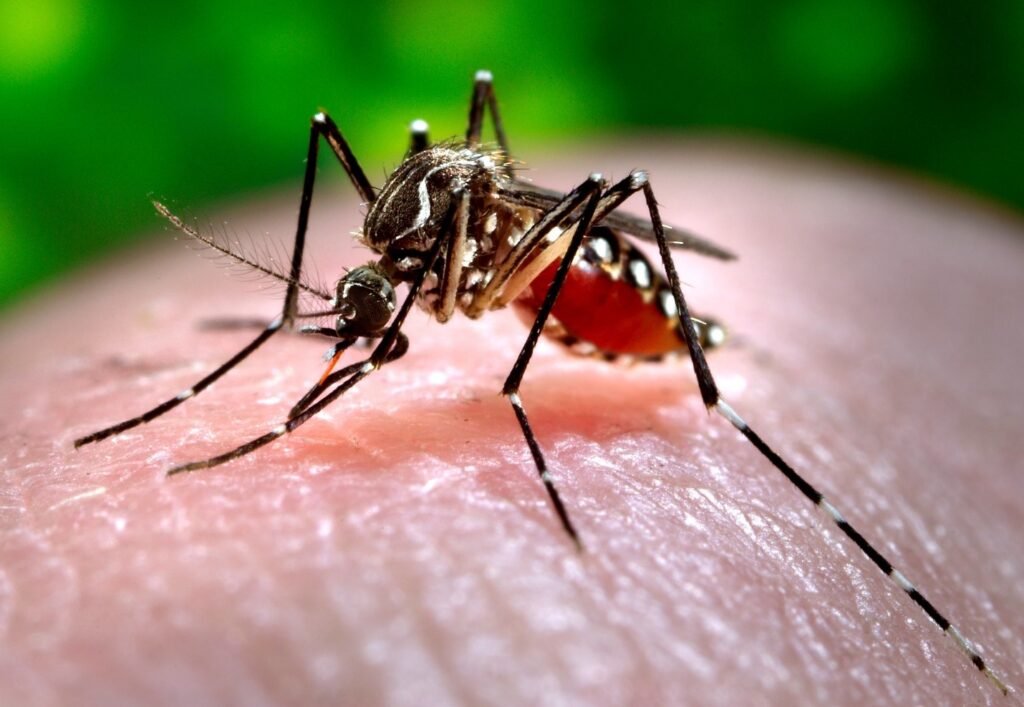
Source: Oregon State University via Flickr.
Researchers used dengue case data from Brazil, Colombia, and Mexico to build a climate-driven model.
This model analyzed how temperature and evapotranspiration from the pastmonths influence dengue outbreaks. It accurately captured monthly trends, predicting 99, 48, and 188 cases per month for Brazil, Colombia, and Mexico, respectively.
Using this model, they projected how climate change could affect dengue risk across Latin America, from Mexico to northern Argentina.
Predicted Impact of Climate Change on Dengue
The projections are concerning. By the 2050s, dengue cases could increase by 260% compared to the 1961–1990 baseline, adding roughly 6.9 million cases per year.
By 2100, a 234% increase could occur, adding around 5.8 million cases per year.
Limiting global warming to 2.0 °C could prevent 0.8 million cases per year by the 2050s and 2.8 million cases by 2100. A stricter 1.5 °C limit adds further reductions, avoiding 0.3 million cases by mid-century and 0.5 million by century’s end.
Brazil is projected to benefit the most, avoiding over 1.4 million cases per year by 2100, followed by Colombia, Venezuela, and Mexico.
Areas and Seasons Most at Risk

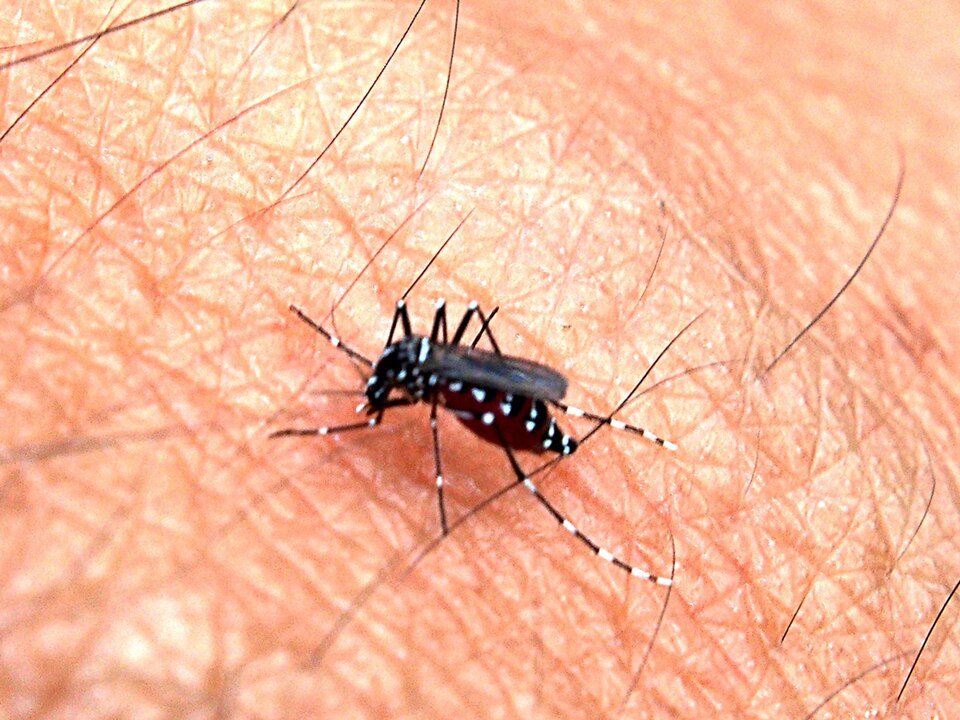
Source: Beto Galetto via Flickr.
Some regions face particularly high risks, including southern Mexico, Caribbean islands, northern Ecuador, Colombia, Venezuela, and Brazil’s coastal states.
Climate change not only increases the number of cases but also extends the dengue transmission season. Limiting warming to 1.5 °C significantly reduces the length of the dengue season in these vulnerable regions, providing a clear health benefit.
Unprecedented Dengue Data in Latin America
This study analyzed one of the largest collections of dengue reports ever assembled for Latin America, covering 350 regions in Mexico and Colombia and 25% of Brazilian municipalities.
These reports span 12 years and include 60% of all dengue cases in the region. By using such a detailed dataset, researchers were able to track local and seasonal variations in dengue transmission more accurately than in previous studies.
Climate Change Could Significantly Increase Dengue Risk
Model projections suggest that climate change will amplify the risk of mosquito-borne diseases across Latin America. Under a high-warming scenario of 3.7 °C, dengue cases could rise by up to 7.5 million per year by the middle of the century.
Limiting warming to 2 °C or 1.5 °C could reduce this increase to 6.7 and 6.4 million additional cases, respectively. Rising temperatures also extend the dengue transmission season and allow mosquitoes to thrive in areas that currently experience low infection rates.
Populations in these regions may be more vulnerable, as they have limited immunity and healthcare systems may be unprepared for large outbreaks.
Health Benefits of Limiting Global Warming

Source: Sujalparab via Wikimedia Commons.
Interestingly, the model predicts fewer cases toward the end of the century in the 1.5 °C and 2 °C scenarios, as slightly cooler temperatures make it harder for Aedes mosquitoes to survive and transmit dengue.
Limiting warming to 1.5 °C could reduce dengue cases by up to 3.3 million by 2100 compared to a 3.7 °C scenario.
Important Considerations and Limitations
While these projections provide valuable insights for public health planning, some factors were not included.
The widespread use of dengue vaccines could lower infection risk, although current vaccines have only about 58% effectiveness. Other factors like urbanization, socioeconomic changes, and international travel could also influence dengue risk but are not fully captured due to a lack of continuous data.
Surveillance quality varies across countries, adding uncertainty to the predictions. Despite these limitations, this study highlights the urgent need for climate action to reduce the future burden of dengue in Latin America.
Take Action Now
Rising dengue risks are a clear reminder that climate change is not just an environmental issue, it is a public health crisis.
Supporting global efforts to limit warming, improving mosquito control, and investing in healthcare infrastructure can save millions of lives.
Stay informed, advocate for climate solutions, and take local steps to protect yourself and your community from dengue.


Such a valuable resource! The practical examples and step-by-step advice make this so much more useful than other content on the same subject.