

Figure 1. Mexican Food. Source: Background Wallpaper | Flickr.
As Latinos, food is at the heart of our culture. We cook with flavor, passion, and we eat often. But sometimes, we eat a little too often. The result? More than 40% of Hispanic adults live with obesity, a major risk factor for chronic diseases.
Research shows that Hispanic and Latino adults are significantly more likely to be diagnosed with type 2 diabetes, and more likely to die from it, compared to non-Hispanic whites. This is not all: obesity, high cholesterol, and liver disease are also more common in our communities.
I know this struggle firsthand. In my own family, almost everyone battles with diabetes, cholesterol problems, or liver disease. When doctors ask me about family disease history, my answer is usually: “pretty much all the metabolic ones.”
What is not well-known is that Helicobacter pylori (H. pylori) infection disproportionally affects more Hispanic/Latino population. Although more research needs to be done to prove that H. pylori causes metabolic syndrome, there is enough evidence for its association with metabolic dysfunction-associated steatotic liver disease (MASLD).
In this blog, I go over the recent findings from Alvarez et al. published in THE LANCET Regional Health. Their study suggest H .pylori plays a role in metabolic liver disease, particularly among Hispanic and Latino populations.
Table of Contents
16,000 Hispanic and Latino Adults Screened for H. Pylori

Figure 2. Electron micrograph of H. pylori. Source: Yutaka Tsutsumi | Wikimedia Commons.
Their cross-sectional analysis from the Hispanic Community Health Study/Study of Latinos, the largest long-term study of Hispanic and Latino health in the U.S., investigated more than 16,000 Hispanic and Latino adults of Mexican, Puerto Rican, Cuban, Dominican, Central American, and South American heritage.
The study explored whether infection with H. pylori can be linked to metabolic dysfunction-associated steatotic liver disease (MASLD), formerly known as fatty liver disease. Researchers also looked at other metabolic conditions such as obesity, diabetes, and metabolic syndrome.
Participants were screened for H. pylori antibodies, which indicate past or current infection. To assess fatty liver disease, researchers used two validated non-invasive tools: the Fatty Liver Index (FLI) and the Hepatic Steatosis Index (HSI).
The study also examined possible links between H. pylori and risk factors like obesity, central obesity, insulin resistance, diabetes, and metabolic syndrome.
Key Findings: H. pylori, Fatty Liver Disease, and Obesity in Hispanic Adults
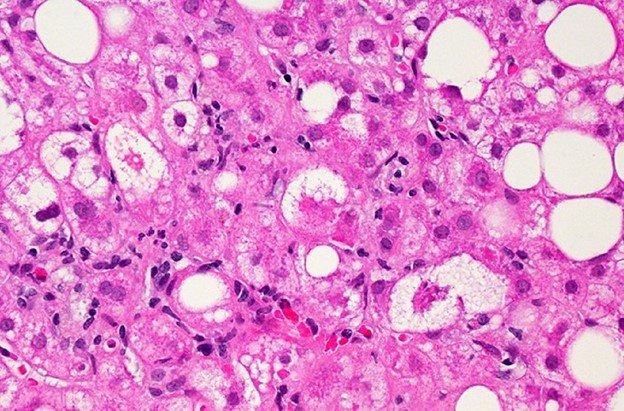
Figure 3. Liver tissue with non-alcoholic fatty liver disease (NAFLD). Source: NIH Image Gallery | Flickr
The study revealed that fatty liver disease is widespread in Hispanic and Latino populations, affecting nearly 50% of participants by the FLI and almost two-thirds by the HSI.
Those who tested positive for H. pylori antibodies were slightly more likely to have MASLD, with the effect most visible in Puerto Rican and Mexican adults.
Researchers also found a modest but meaningful link between H. pylori infection and obesity, even after adjusting for other health risks.
While the findings point to a possible role for H. pylori in liver disease and metabolic health, they do not prove that the bacterium directly causes MASLD or obesity.
More research is needed to understand how H. pylori may contribute to chronic diseases in Hispanic and Latino communities.
Top Findings
- The study confirmed a high prevalence of liver disorders, metabolic conditions, and H. pylori infection among the U.S. Hispanic and Latino population.
- Adults with H. pylori infection showed a modest link to obesity and metabolic-associated steatotic liver disease (MASLD).
- This association was particularly strong in Puerto Rican and Mexican communities, highlighting population-specific risk factors.
- Findings are consistent with observational studies from Asia, suggesting a global pattern in pylori-related metabolic effects.
Bottom line: H. pylori may not only cause stomach ulcers, it can also lead to systemic effects on liver and metabolic health, particularly in high-risk Hispanic populations.
Why This Matters for Hispanic and Latino Communities

Figure 4. Hispanic heritage month celebration. Source: Holy Fmaily College 1935 | Flickr.
Fatty liver disease is now one of the leading causes of liver-related illness in the Americas, and its rise parallels the increase in obesity and metabolic disorders.
These findings are especially important for Hispanic and Latino communities, who already experience higher rates of obesity, diabetes, and liver disease compared to other groups.
Understanding how infections like H. pylori contribute to this health burden could pave the way for more personalized prevention strategies, including:
- Early screening for H. pylori in high-risk Latino populations
- Tackling antibiotic resistance to ensure effective treatment and eradication
Integrating liver health awareness into public health campaigns about gut infections
Conclusion: Protecting Gut and Liver Health
This study does not prove that H. pylori directly causes liver disease—but it highlights how a seemingly “simple” stomach infection could have far-reaching effects on metabolic and liver health.
If you are of Latino heritage and have concerns about your gut, liver, or metabolic health, talk to your doctor. Screening for H. pylori may be one extra step in protecting both your stomach and your liver.
Your health takeaway: If you or your family members have risk factors such as obesity, diabetes, or fatty liver disease (MASLD), ask your doctor about testing for H. pylori. Early detection and treatment could reduce risks and support long-term health.

At Pathogenos, we believe knowledge is prevention. If this article opened your eyes to the hidden links between gut infections and liver disease, share it with friends, family, and your community!
Follow Pathogenos for more science-backed insights into the health challenges our communities face, and join the conversation by leaving a comment below:
- Have you or someone you know been diagnosed with H. pylori?
- How do you think this information could help Latino communities act on liver health?
The more we talk about it, the better we can protect our health, together.





The article is good and nicely formatted. The site is
useful and efficient.