
Figure 1. Hispanic heritage photo. Source: itoldya420.getarchive.net
Helicobacter pylori (H. pylori) is a bacterium that can survive in the stomach’s acidic environment. Although many people with H. pylori show no symptoms, it is a known cause of chronic gastritis. More importantly, H. pylori infection is a significant risk factor for gastric cancer.
Globally, H. pylori bacteria are responsible for approximately 36.9% of all infection-related cancers. Among the populations most affected are Hispanics and Latinos. Studies have shown that H. pylori infection rates are consistently higher in Hispanic/Latino individuals compared to non-Hispanic whites.
In addition to having a higher infection rate, Hispanic/Latino populations tend to develop gastric cancer at a younger age. They also experience worse outcomes after diagnosis. These disparities raise serious public health concerns.
In a previous blog, I discussed how H. pylori seroprevalence can vary based on Hispanic/Latino background. In this blog, we will explore the connection between H. pylori, gastritis, gastric cancer, and the need for targeted prevention efforts in high-risk communities.
Table of Contents
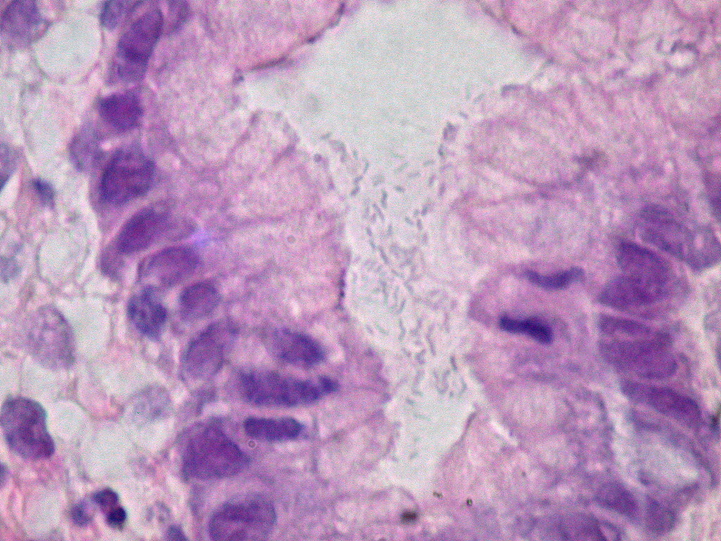
Figure 2. Many tiny, rod-shaped, curved H. pylori bacteria filling up the lumen of the gastric foveola (gastric mucosa). Source: Helicobacter pylori, Gastric Mucosa, H&E. Author: Ed Uthman from Houston, TX, USA
H. pylori in the Hispanic Population: A Silent Epidemic?
One of the earliest studies to highlight this issue was published in 1991 by Dehesa et al. in the Journal of Clinical Microbiology. The researchers found a high prevalence of both H. pylori infection and histologic gastritis in asymptomatic Hispanic adults living in Los Angeles.
Since then, more recent studies by Tsang et al. and Nieto Domínguez et al. have confirmed these findings. Taken together, the evidence strongly suggests that H. pylori may play a major role in health disparities affecting Hispanic and Latino populations.
The study by Dehesa et al. investigated 58 asymptomatic Hispanic adults in Los Angeles through upper gastrointestinal endoscopy and biopsy. Despite the participants showing no clinical symptoms, 79% were found to harbor H. pylori in their gastric biopsies.
Astonishingly, all participants with H. pylori also exhibited histologic gastritis, an inflammatory condition of the stomach lining that can precede more severe gastrointestinal disorders.
Even more notably, four participants had gastritis without evidence of H. pylori infection, highlighting that while the bacterium is a strong contributor, it’s not the sole cause. Still, the strong association suggests that H. pylori infection is a ubiquitous and potentially pathogenic presence in the Hispanic gastric mucosa, regardless of age or immigration status.
Histologic gastritis refers to microscopic inflammation of the stomach lining, detectable only by examining stained biopsy samples under a microscope. Chronic gastritis is marked by lymphocyte ( white blood cell playing a role in the immune system) infiltration, while active chronic gastritis features additional neutrophil (a type of white blood cell that helps fight infections) presence.
Such conditions can persist for years unnoticed and may lay the groundwork for precancerous changes like glandular atrophy and intestinal metaplasia.
Diagnostic Techniques: From Endoscopy to Serology

Figure 3. Human stomach. Source: Wikimedia Commons. Author: Hariadhi.
The researchers employed a combination of diagnostic tools:
- Endoscopic Biopsy of the Upper GI Tract: Doctors used a thin, flexible tube called an endoscope to collect tissue samples from the esophagus, stomach (including the antrum and corpus), and duodenum.
- pylori Culture from Biopsy Samples: These tissue biopsies were grown on selective culture media under low-oxygen (microaerobic) conditions to isolate H. pylori bacteria.
- Histological Examination for Gastritis: The stomach tissues were stained and examined under a microscope to detect immune cell infiltration, chronic gastritis, and the presence of pylori.
- Serologic Testing (ELISA for pylori Antibodies): Blood samples were tested using ELISA assays to detect H. pylori-specific antibodies (IgG and IgA), which showed strong agreement with biopsy results.
This multipronged approach ensured accurate detection and helped confirm that different diagnostic methods vary in sensitivity (histologic stains detected H. pylori in 93.5% of cases, while cultures confirmed 89%).
Gastric Cancer Risk in Hispanics
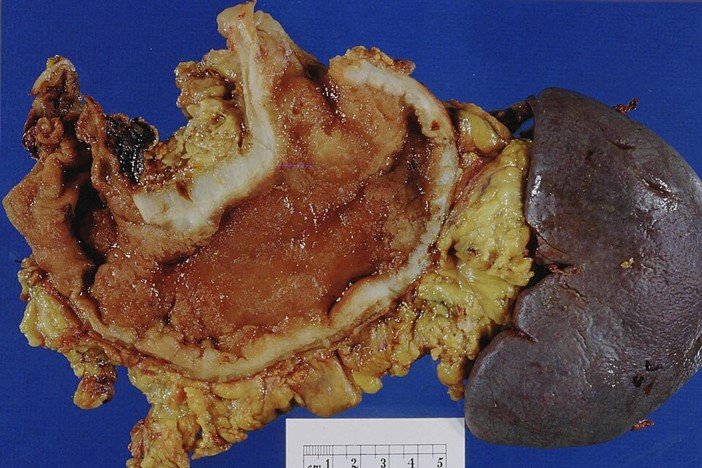
Figure 4. Infiltrative gastric cancer. Source: Wikimedia Commons. Author: Narraburra
Chronic H. pylori infection is a recognized risk factor for non-cardia gastric adenocarcinoma—cancer in the central part of the stomach NIH, 2023. Hispanic populations in the U.S. face disproportionately high rates of gastric cancer, though the exact reasons remain unclear. Genetics, diet, environmental exposure, and limited healthcare access are all thought to play a role.
The high prevalence of H. pylori among asymptomatic Hispanics may be a key contributor to this disparity, particularly given the bacterium’s role in initiating the gastric inflammation–atrophy–carcinoma cascade.
Globally, H. pylori prevalence is higher in developing nations, often exceeding 80% in some populations. In contrast, U.S. Caucasians have an estimated annual infection rate of just 1–2%. Among Hispanic populations in the U.S., the rate remains consistently high across age groups, indicating that socioeconomic and possibly genetic factors may influence transmission and persistence.
The bacterium’s ability to bind specifically to gastric epithelial cells and locally neutralize stomach acid contributes to its long-term survival. Transmission is thought to occur via oral-oral or fecal-oral routes, often within households. Poor sanitation and crowded living conditions, often correlated with lower socioeconomic status, are associated with higher infection rates.
Should We Be Testing for H. pylori?
Despite the clinical significance of H. pylori, routine screening is not universally recommended in asymptomatic individuals. However, in 2017, the American College of Gastroenterology expanded its guidelines to recommend treatment and eradication testing for all identified cases of H. pylori infection, regardless of symptoms.
The 2018 Houston Consensus further suggested that immigrants from H. pylori, endemic regions, including Latin America, should be considered for screening. Yet, no definitive U.S. guidelines currently exist for population-wide testing in high-risk groups like Hispanics.
Can We Prevent or Treat It?
Treatment for H. pylori typically involves a combination of antibiotics and acid-reducing medications. However, antibiotic resistance and treatment failure remain challenges.
Probiotics have shown some promise in reducing bacterial load and inflammation, but they are not a replacement for eradication therapy.
Non-invasive detection methods like urea breath tests, stool antigen tests, and serology offer alternatives to endoscopy, making large-scale screening more feasible.
The implementation of these tools in Latin American countries and high-risk U.S. populations could help address underdiagnosis and undertreatment.
A Call to Action
The study by Dehesa et al. highlights an alarming but often overlooked public health concern: H. pylori infection is widespread among asymptomatic Hispanic adults in the U.S., and nearly all cases are accompanied by histologic gastritis.
Given the established link between H. pylori and gastric cancer, particularly in vulnerable ethnic groups, there is an urgent need to reassess our detection and treatment strategies.
Future research should focus on understanding ethnic and socioeconomic factors that influence H. pylori transmission and pathology. In the meantime, targeted screening and culturally competent healthcare interventions may help reduce the burden of gastric disease in Hispanic communities.