3D representation of a Zika virion. Photo by Manuel Almagro Rivas via Wikimedia Commons.
Highlights
- These viruses look similar, but children show key differences.
- Dengue leaves clear clues in the blood and body.
- Joint pain points to chikungunya, rash to Zika.
- Combining symptoms and simple labs improves diagnosis.
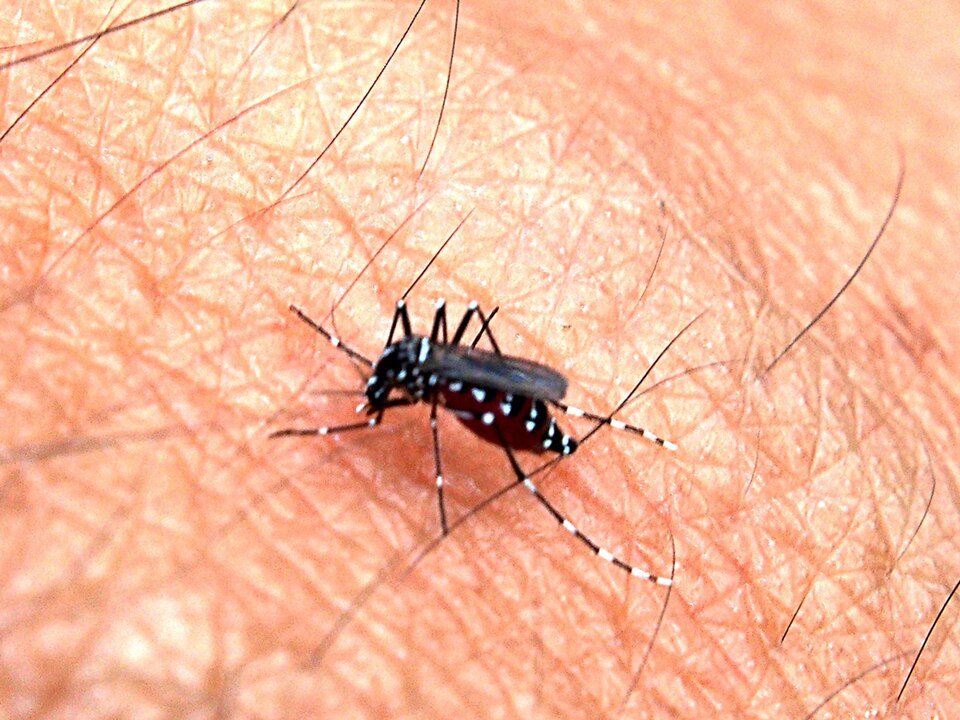
Dengue, chikungunya, and Zika are mosquito-borne viruses that often circulate together in tropical regions like Latin America.
These present with similar symptoms in adults. In children the clinical picture becomes blurrier, especially when fever, rash, and fatigue overlap.
This makes diagnosis complicated in children and adolescents.
The study by Carrillo et al. published in The Lancet Child & Adolescent Health of nearly two decades of pediatric cases in Managua, Nicaragua, helps clarify how we can distinguish these infections in real clinical settings.
Differences Between Dengue, Chikungunya, and Zika

Latino children playing swing. Photo by epSos.de via Wikimedia Commons.
Researchers tracked 1,405 laboratory-confirmed dengue, 517 chikungunya, and 522 Zika cases among children aged 2–<18 years between 2006 and 2023 in a large prospective cohort.
Over this 18-year period, they documented detailed symptom profiles and blood count results during the first 10 days of illness. This helped create one of the most comprehensive pediatric datasets for these diseases.
One of the strongest findings was that clinical features differ systematically between the three diseases.
Children with dengue were much more likely to show basophilia (high levels of basophil cells), leukopenia (low white blood cell counts), abdominal pain, and other markers of immune and blood-cell changes.
These patterns were statistically different compared with chikungunya and Zika, which presented differently on lab tests and exams.
In chikungunya, arthralgia (joint pain) was a defining feature, children consistently reported it more frequently than in dengue or Zika.
Meanwhile, Zika was more likely to present with a generalized rash and absence of fever or systemic inflammation, making it clinically distinct despite shared features.
Machine learning models further highlighted which symptoms most reliably predicted each disease.
Absence of fever and lymphocytopenia (having fewer lymphocytes) strongly pointed toward Zika, while arthralgia without leukopenia or papular rash was most predictive of chikungunya.
Dengue cases tended to cluster around clinical signs of inflammation and blood dysregulation, like basophilia and leukopenia.
What These Findings Mean
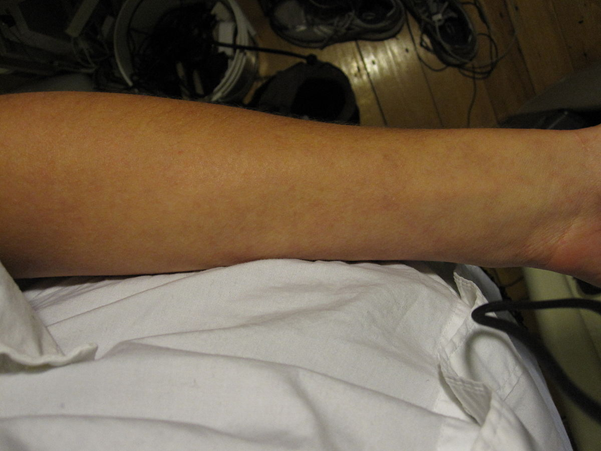
Dengue rash. Photo by calliopejen via Wikimedia Commons.
In endemic settings, relying on fever alone is not enough.
Patterns of blood count changes and symptom clusters can meaningfully improve differential diagnosis of arboviral diseases in children.
Dengue was strongly associated with hematologic and inflammatory changes.
These included leukopenia, basophilia, and abdominal pain, reflecting systemic immune dysregulation.
Chikungunya stood out for frequent arthralgia (pain in joint), even in pediatric patients, while Zika most often presented with generalized rash and minimal fever or inflammation.
Importantly, machine-learning models reinforced these distinctions, identifying combinations of symptoms and blood count patterns that reliably predicted each infection during the first 10 days of illness.
Together, these findings show that careful clinical assessment makes a real difference.
When combined with basic blood tests, it greatly improves the ability to tell arboviral infections apart in children living in endemic regions.
Stay Informed

Photo by DigiGal DZiner via Wikimedia Commons.
Stay ahead of emerging infectious disease risks. Pathogenos breaks down peer-reviewed research into clear, actionable insights for clinicians, researchers, and public health professionals working in endemic regions.
Subscribe to Pathogenos to get evidence-driven updates on dengue, Zika, chikungunya, and other pathogens shaping global health, before outbreaks escalate.