Highlights
- Researches tested multiple mosquito traps in the Peruvian Amazon.
- UV traps performed best at catching mosquitoes.
- Different traps catch different mosquito species.
- Forest areas had more mosquitoes than areas near human housing.
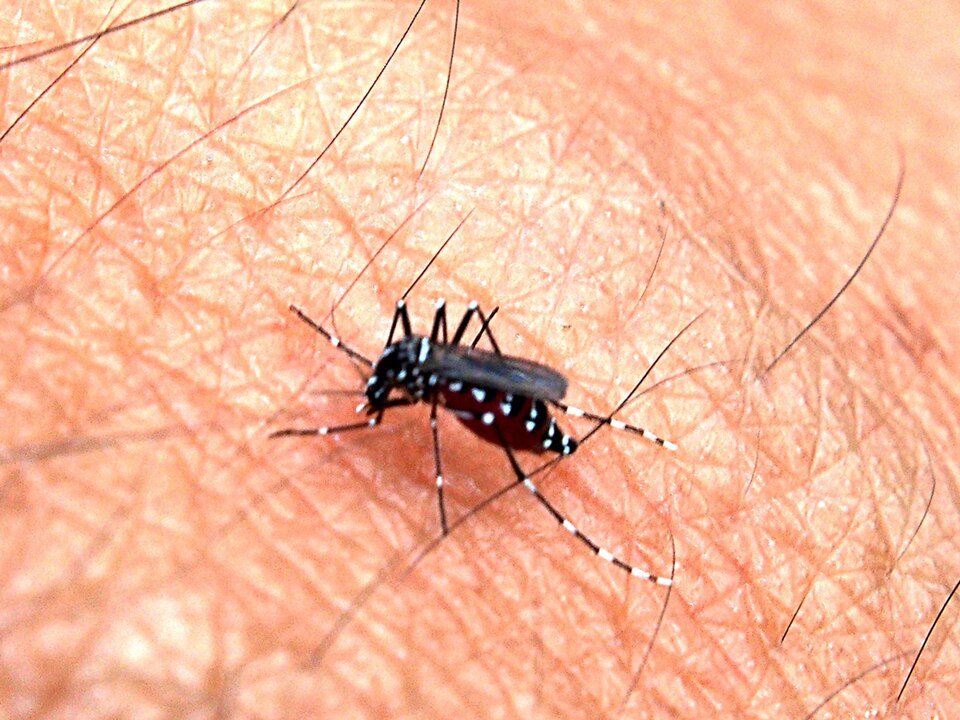
Dengue is rising across the Americas. This makes Aedes mosquitoes, especially Aedes aegypti, a critical focus for public health and vector control programs to prevent the spread of dengue, Zika, and chikungunya.
Research studies show that one key strategy to improve our ability to monitor mosquito populations and help prevent the zoonotic diseases they transmit is choosing the right mosquito trap.
In this blog, we discuss the research study done by Peck et al. published in the Journal of the American Mosquito Control Association. The researchers analyzed how trap type, attractant, and environmental conditions influence mosquito density, species diversity, and community composition in the Peruvian Amazon.
Table of Contents
How Researchers Evaluated Traps
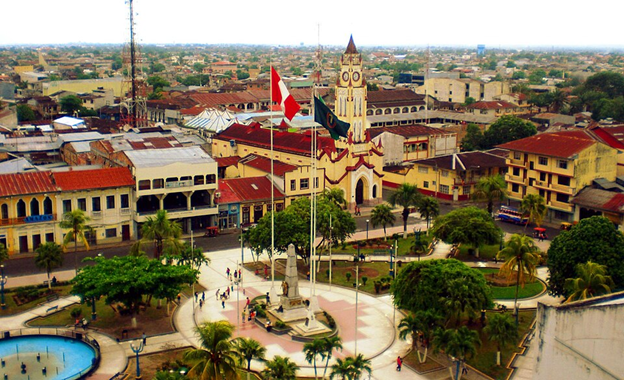
A view of the Plaza de Armas in Iquitos, Peru. Photo by Percy Meza via Wikimedia Commons.
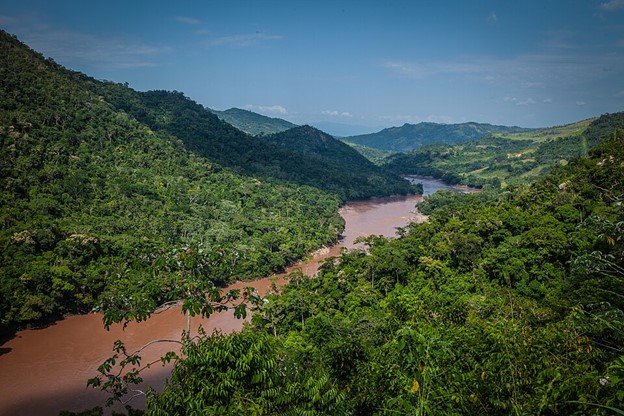
Researchers conducted multiple mosquito surveillance studies near Iquitos, Peru, to determine which mosquito traps work best in both forest and human-occupied environments.
The studies compared several commonly used mosquito traps, including CDC light traps, UV traps, EVS traps, and Biogents Sentinel traps.
Traps were placed in rainforest areas and near military barracks, where mosquito exposure is higher due to frequent human activity.
Some traps used carbon dioxide attractants made from yeast, sugar, and water to mimic human breathing and increase mosquito capture.
Over several weeks, mosquitoes were collected each evening, safely handled, and identified by species to understand which mosquitoes were present and in what numbers.
This approach allowed scientists to compare mosquito density and species diversity across different trap types and locations in the Peruvian Amazon.
To analyze the data, the team used advanced statistical modeling to identify which traps and environmental factors best predicted mosquito abundance.
These analyses helped determine how mosquito communities differ between forest and peri-domestic settings and which surveillance methods provide the most reliable data.
Which Mosquito Traps Work Best? Results from the Peruvian Amazon
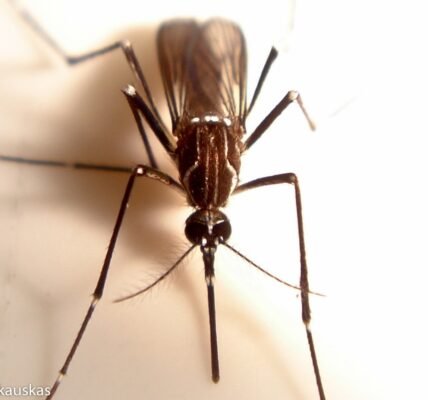
CDC Gravid trap for mosquito surveillance. Photo by NIAID via Wikimedia Commons.
Overall, researchers collected 5,363 individual mosquitoes, including 7 genera and 28 species.
Across nearly all sampling sites, UV light traps dramatically outperformed every other trap in highest catch rate while the CDC-L had the lower catch rate.
In contrast, commonly used surveillance tools like CDC light traps or traps baited with CO₂ sources only caught a fraction of the mosquitoes, and their performance varied depending on the species present.
This means that depending on the mosquito community, some traps naturally underperform.
The forest environment magnified these differences. In the forested site, mosquito abundance was extremely high, over ten times higher than the military barracks, which had far fewer mosquitoes overall.
The barracks also had a practical issue: high numbers of moths and other insects crowded the light traps, making it harder for mosquitoes to enter and lowering trap efficiency.
These results emphasize that both trap choice and trapping environment play major roles in how many mosquitoes you’re able to collect.
Different Mosquito Traps Capture Different Species
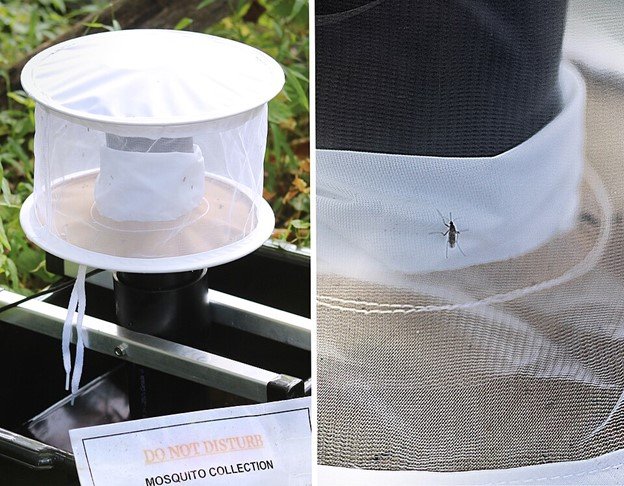
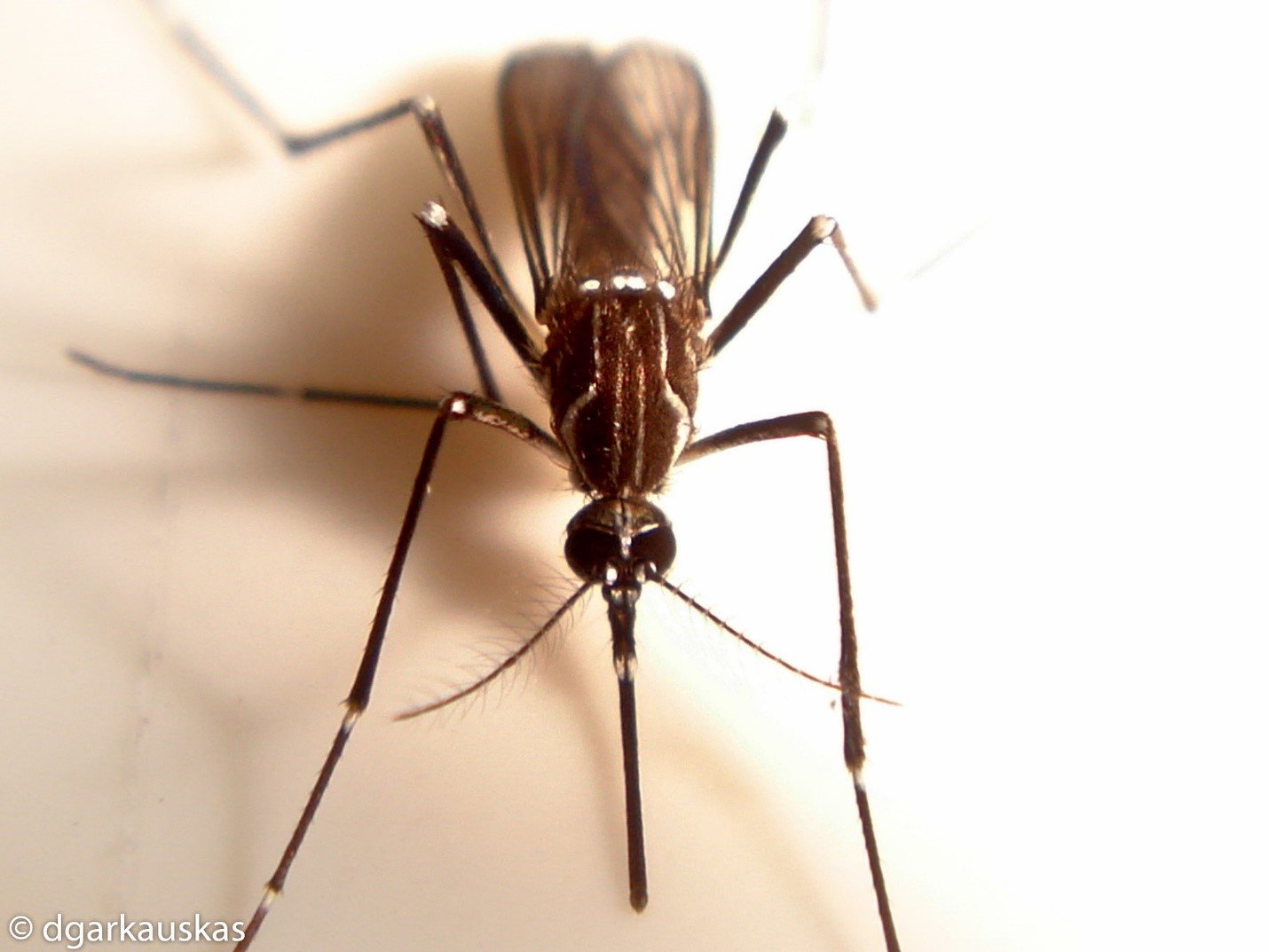
Aedes aegypti by dgarkauskas via Flickr.
Although UV traps caught the highest number of mosquitoes, they weren’t the only ones providing useful information.
The study found that different traps tend to attract different species, which means each one captures only part of the mosquito community.
The UV trap consistently caught the largest number of species, giving it the broadest coverage of the ecosystem.
Other traps, like the BG-Sentinel (BGS) or Passive Box Trap (PBT), caught fewer species overall but tended to capture specific groups of mosquitoes.
These species-selective traps are useful when surveillance efforts target particular vectors, such as Aedes aegypti. However, they don’t show the full diversity of mosquitoes in the area.
Because each trap paints a different picture, relying on only one trap type can lead to an incomplete or biased understanding of mosquito populations.
For programs trying to monitor vector-borne disease risk or track ecological changes, a combination of traps gives a far more accurate view of which species are active and when.
Forest mosquitoes vs. barracks mosquitoes
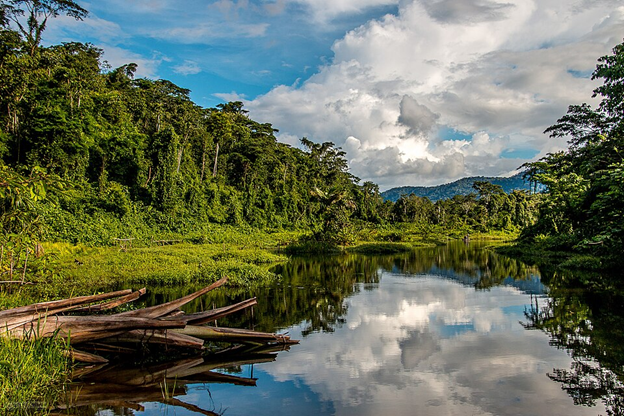
Manu National Park Peru by Henry Vagrant via Wikimedia Commons.
The two sampling locations showed striking differences in mosquito communities.
The forest sites were full of mosquito activity, with both higher numbers and a richer variety of species.
This reflects a more diverse natural ecosystem with plenty of habitat for different mosquito species to thrive.
Meanwhile, the barracks site told a very different story: mosquito counts were low, species diversity was limited, and the mosquitoes present were not the same species dominating the forest.
Human activity, cleared vegetation, artificial lighting, and the presence of other insects all influenced which mosquitoes were active around the barracks.
These differences show that mosquito communities are highly environment dependent.
Even locations that are geographically close can host completely different mosquito populations depending on habitat structure, human disturbance, and ecological resources.
For mosquito control teams, this underscores the importance of site-specific surveillance rather than assuming one area behaves like another.
In conclusion
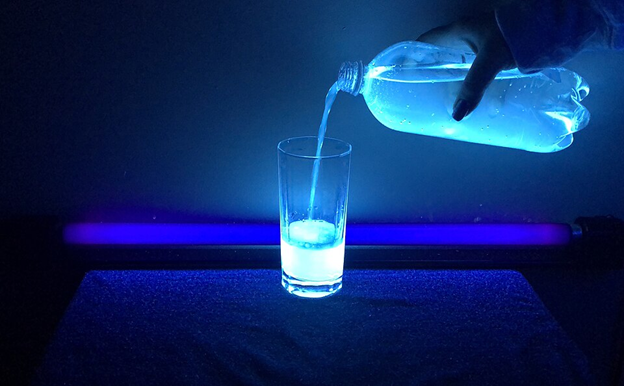
Tonic water illuminated by UV light. Photo by Joseph Blosser via Wikimedia Commons.
This study provides a comprehensive comparison of multiple mosquito trap types tested simultaneously in forested areas and a military barracks in the Peruvian Amazon.
The findings build on decades of mosquito surveillance near Iquitos, which has one of the world’s highest mosquito diversities.
Their study shows that UV light traps consistently outperformed CO₂ traps, capturing more mosquitoes and more species across all trials.
Forest sites yielded far greater abundance and diversity than the barracks, highlighting how habitat and artificial lighting shape mosquito communities.
The research represents one of the first applications of Bayesian inference to mosquito trap data, offering clearer estimates than traditional frequentist methods, especially with small samples.
Overall, the study demonstrates that UV light traps are powerful tools for mosquito surveillance in Amazonian environments.
It also shows that Bayesian approaches can improve how scientists analyze mosquito populations, ultimately helping vector control programs make more precise, data-driven decisions.
Call to action

Photo by Zuko.io Images via Wikimedia Commons.
Stay ahead of the next outbreak, don’t miss critical updates. At Pathogenos, we break down the latest science on viruses, public health, and emerging threats so you can stay informed and prepared.
If you found this article helpful, share it with your community and help spread awareness. Want more evidence-based insights like this?
Subscribe to our newsletter and join a growing network of readers committed to public health. Your knowledge can help protect others. Start today.