Source: André Luiz D. Takahashi | Flickr
Reported dengue cases in Latin America have surged from just over 1 million in the early 1980s to nearly 4.8 million between 2000 and 2007, placing a heavy financial burden on low- and middle-income countries. Brazil alone accounts for over 70% of reported cases in the Americas, heightening the risk for neighboring countries.
To understand the scale of recent dengue outbreaks in Latin America, Sansone et al. analyzed Brazil’s Ministry of Health surveillance data from 2023–2024. In this blog, we go into depth on their findings which include suspected and confirmed cases, deaths, severity, demographics, and vaccination coverage.
Table of Contents
Brazil’s Ministry of Health Open Data to Improve Dengue Tracking
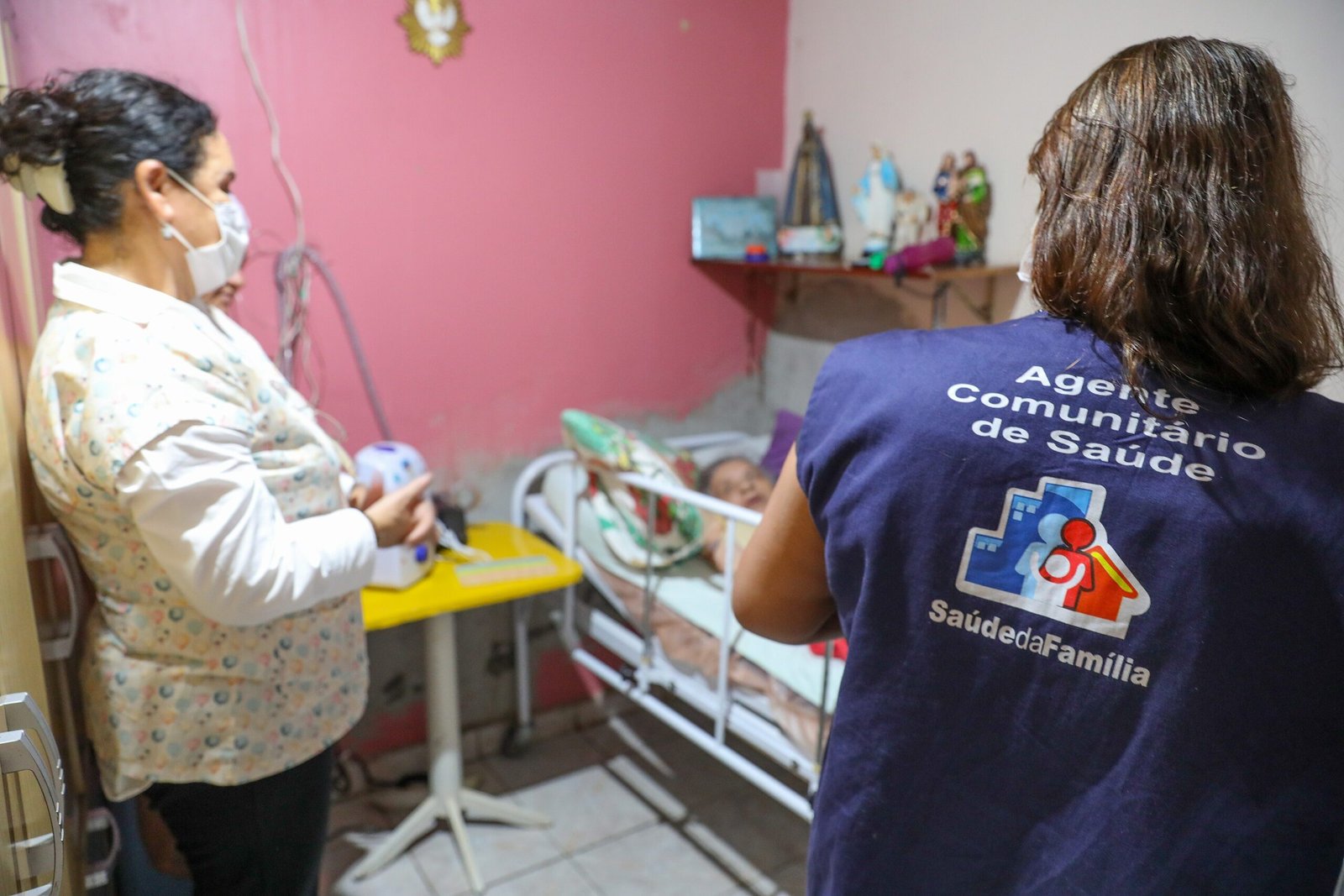
Tracking infectious diseases in Latin America is challenging due to limited access to diagnostic tests and economic inequalities between regions, which often lead to underreporting.
In Brazil, the Ministry of Health provides open data on dengue that enables analysis of trends between 2023 and 2024, mainly focusing on suspected cases.
The Ministry’s data cover all epidemiological weeks of 2023 and the first 11 weeks of 2024, including information on suspected and severe cases, incidence, deaths, lethality rate, and demographics such as sex, race, and age group.
Study Approach
Suspected cases were defined as patients with fever, headache, body aches, rash, or eye pain who had been in areas where Aedes aegypti is common. Confirmed cases required lab tests such as non-structural protein (NS1) antigen detection, PCR, or antibody assays. Severe dengue included complications like bleeding, organ damage, or shock.
Statistical analysis was performed using the Statistical Package for the Social Sciences (SPSS) software, and comparisons were made between demographic groups, states, and time periods to identify trends in dengue risk and mortality.
Dengue surged in 2024, disproportionately impacting women, children, and Indigenous population
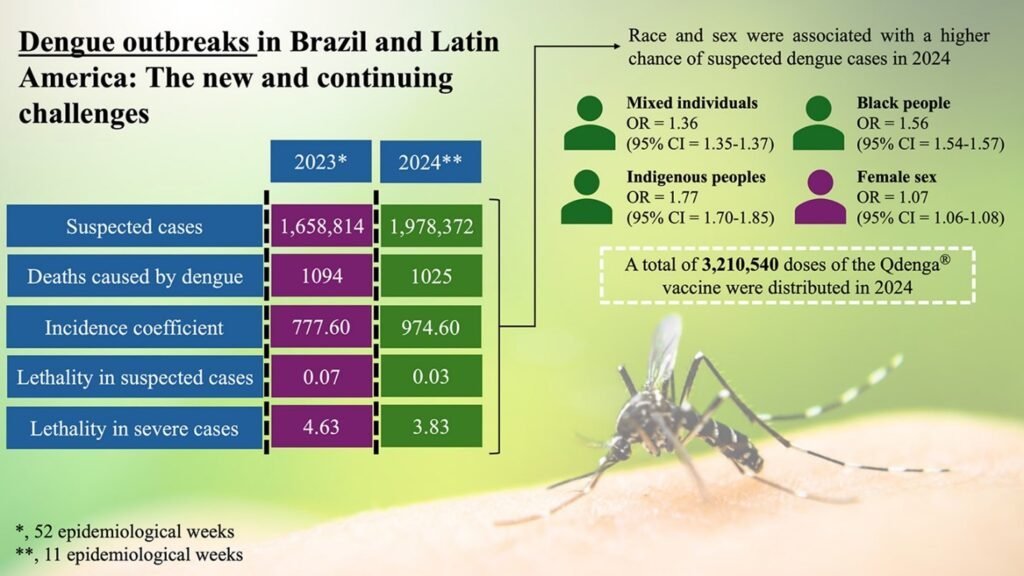
Graphical abstract from Sansone et al.
Between January and March 2024, 1.97 million suspected dengue cases were reported in Brazil, 20% more than all of 2023 combined. Some weeks saw up to a 700% increase in infections compared to the previous year.
Women represented 55.5% of all cases. Mixed-race (40.6%), Black (5.8%), and Indigenous (0.3%) individuals were disproportionately affected in 2024, compared to 2023. Researchers linked this to social inequalities, such as limited healthcare access, lower income, and reduced dengue awareness.
People aged 20–49 years made up most cases, while older adults had higher mortality rates. Children under 10 were more likely to be hospitalized, but deaths were more common in those over 80.
Brazil drives the regional epidemic with re-emergence of DENV-3 serotype
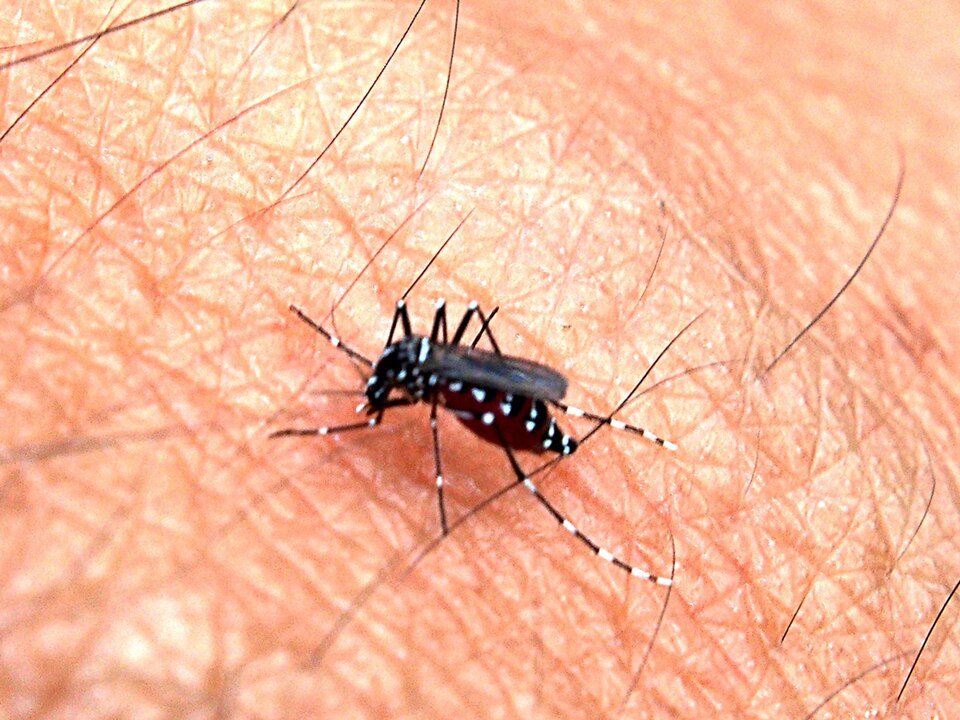
Dengue virus (DENV) is spread by Aedes aegypti mosquitoes and caused by four viral serotypes: DENV-1, DENV-2, DENV-3, and DENV-4. Each produces similar symptoms but triggers a unique immune response. As a result, multiple dengue infections are possible, and second infections often carry a higher risk of severe disease.
For the first time in 15 years, DENV-3 has reappeared in Brazil and other Latin American countries. Because immunity to DEN-3 is low, populations are now more susceptible, possibly explaining the massive 2024 outbreak.
The case fatality rate dropped from 0.07% (2023) to 0.03% (2024). However, this likely reflects underreporting of mild cases rather than an actual reduction in severity.
Vaccines offer hope, but rollout is slow
Brazil became the first LATAM country to distribute the new Qdenga® vaccine, with over 3 million doses administered. The vaccine targets ages 10–14 years, as they have the highest hospitalization risk. Still, vaccine availability, storage, and education remain barriers across the region.
This study found that areas with more vaccine doses also had more severe cases and deaths, suggesting vaccines were prioritized for high-risk regions. However, reaching rural and indigenous communities remains a challenge.
Why It Matters for Other Countries in Latin America
Brazil’s 2024 dengue outbreak shows how climate, inequality, and biology intersect to drive disease. The reemergence of DENV-3 and the slow but steady introduction of vaccines like Qdenga® mark a critical turning point in dengue control. But without equitable access to healthcare, surveillance, and education, dengue will remain a persistent threat across Latin America.
Factors like urban poverty, inefficient mosquito control, and climate change make dengue control increasingly difficult. Insecticide resistance and the arrival of new dengue genotypes further complicate containment efforts.
Call to Action

Source: Zuko.io Images | Flickr
Latin America is facing one of its worst dengue seasons in decades, and your actions can make a real difference:
- Stay informed by following reliable health updates and sharing accurate information within your community;
- Reduce mosquito breeding by eliminating standing water and using personal protection like repellents and window screens; support vaccination efforts where Qdenga® is available;
- Advocate for stronger public health resources, equitable healthcare access, and improved surveillance.
Dengue is preventable, your awareness and engagement help protect the most vulnerable and strengthen community resilience.