
scientist in lab

What Happens to Your Blood Sample During a Dengue Test?

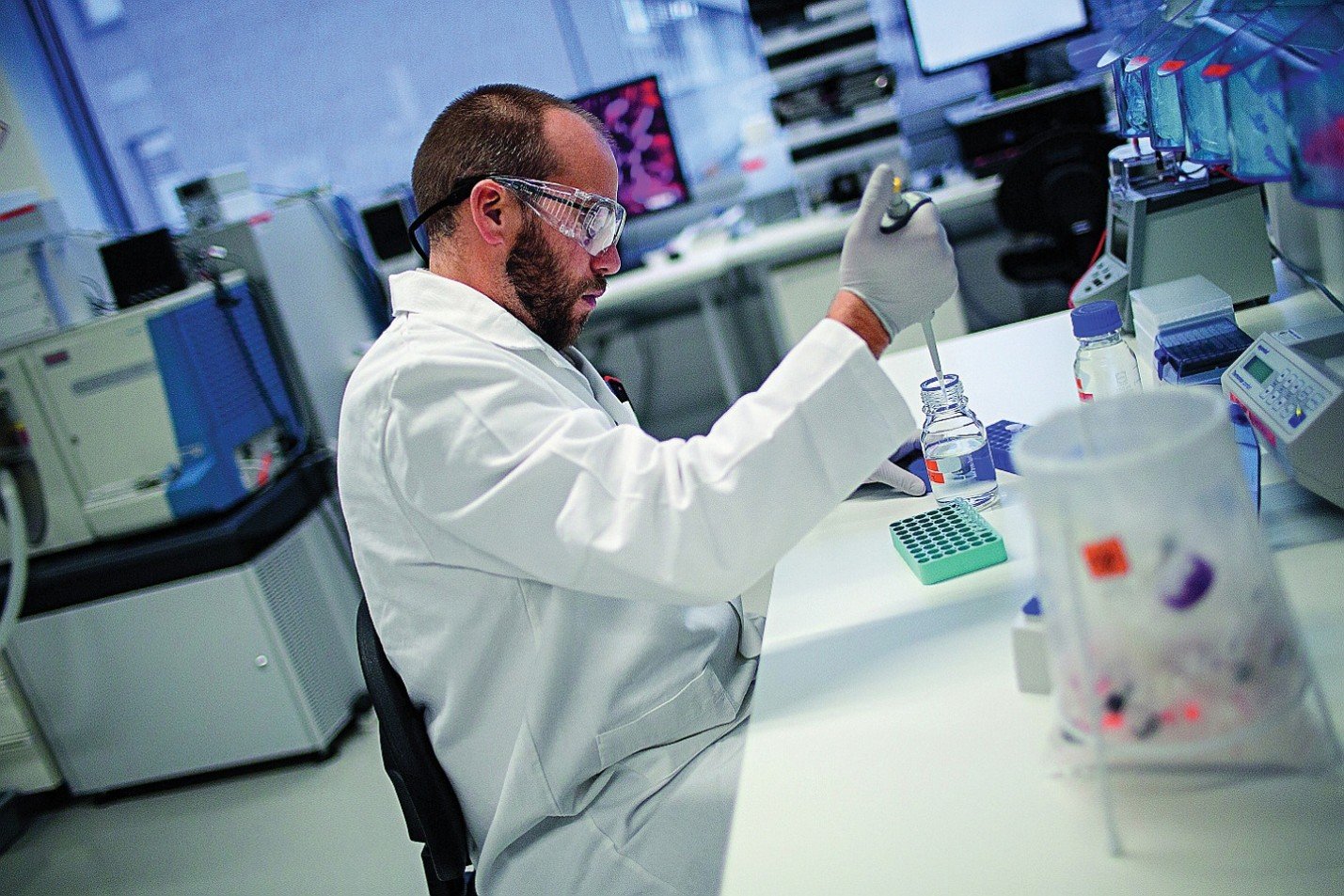
scientist in lab

Source: Nestle Institute of Health Sciences via Flickr.

Highlights

  • RT-PCR detects dengue viral RNA and is most reliable during the first week of illness.
  • The test converts viral RNA into DNA and amplifies dengue-specific sequences for detection.
  • A positive result confirms active infection; a negative result later in illness does not exclude dengue.

When someone arrives at the hospital with a sudden high fever, headache, muscle pain, and a recent history of mosquito exposure, clinicians may suspect dengue.

But many tropical diseases, including chikungunya, Zika, malaria, and even influenza, can cause similar symptoms during the first few days of illness.

So how do laboratories determine whether dengue virus is responsible?

One of the most powerful tools is reverse transcription polymerase chain reaction (RT-PCR).

RT-PCR is a molecular technique capable of detecting tiny amounts of dengue virus before the immune system has produced detectable antibodies.

Because it identifies the virus itself rather than the body’s response, RT-PCR is considered one of the most reliable methods for confirming an acute dengue infection during the early phase of disease.

Let’s step inside the laboratory and follow what happens from the moment a patient’s blood sample arrives.

Step 1: Extracting the Viral RNA

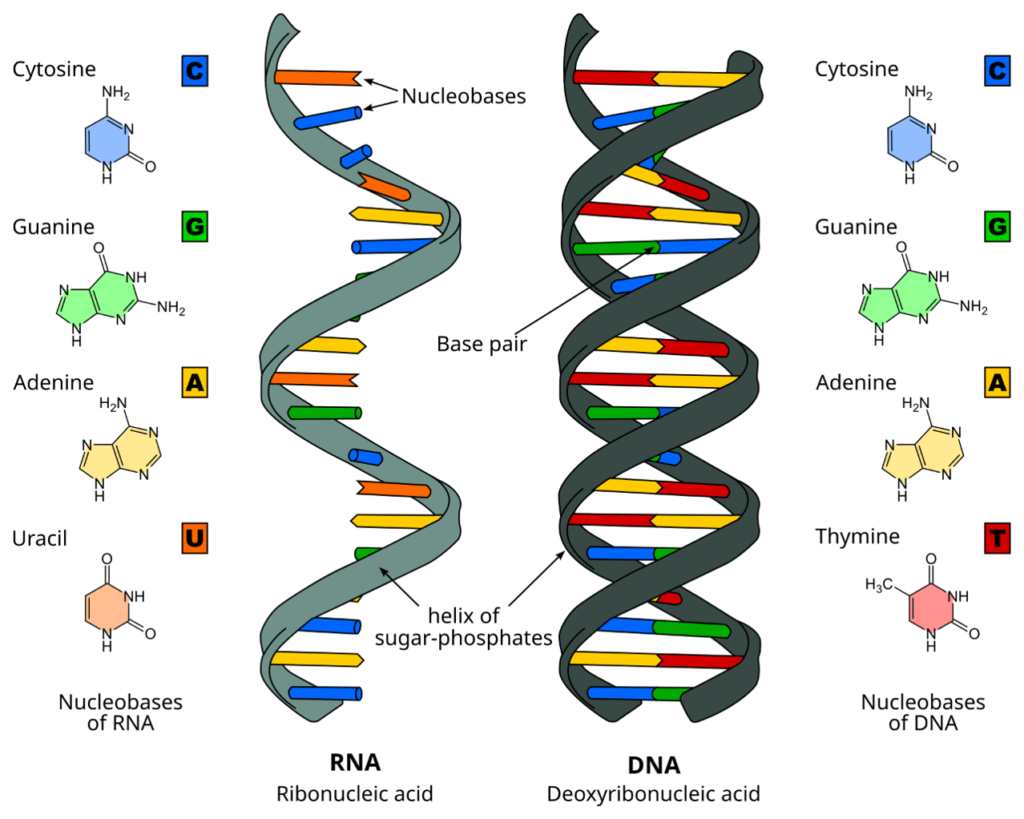
difference between DNA and RNA

Differences between RNA and DNA. Source: Creative Commons Attribution-Share Alike via Wikimedia Commons

The first challenge is simple in concept but technically demanding: finding viral genetic material within a tube of blood.

Blood contains millions of human cells, proteins, enzymes, and other molecules. If dengue virus is present, its RNA represents only a tiny fraction of everything in the sample.

Laboratory scientists begin by isolating RNA using specialized extraction kits. These methods break open viral particles, remove proteins and contaminants, and purify the viral RNA so it can be analyzed.

This extraction step is critical. Poor RNA quality can reduce the sensitivity of downstream testing and increase the chance of false-negative results.

Step 2: Why Reverse Transcription Comes First

Unlike humans, whose genetic information is stored as DNA, dengue virus carries its genome as single-stranded RNA.

Standard PCR enzymes cannot amplify RNA directly.

To overcome this limitation, laboratories first use an enzyme called reverse transcriptase to convert viral RNA into complementary DNA (cDNA). This process gives RT-PCR its name: reverse transcription followed by polymerase chain reaction.

Only after RNA has been converted into DNA can PCR begin amplifying the target sequence.

Step 3: Making Millions of Copies

Once complementary DNA has been produced, PCR begins.

PCR works like a molecular photocopier. During each cycle, the DNA is heated to separate its strands, short DNA primers bind to dengue-specific genetic sequences, and a DNA polymerase synthesizes new copies.

Each cycle approximately doubles the amount of target DNA.

After 30–40 cycles, a single viral RNA molecule can generate millions, or even billions, of DNA copies, making previously undetectable amounts of virus visible to laboratory instruments.

This remarkable amplification is what allows RT-PCR to detect infection even when only small amounts of virus are present in the patient’s blood.

Step 4: Watching the Virus Appear in Real Time

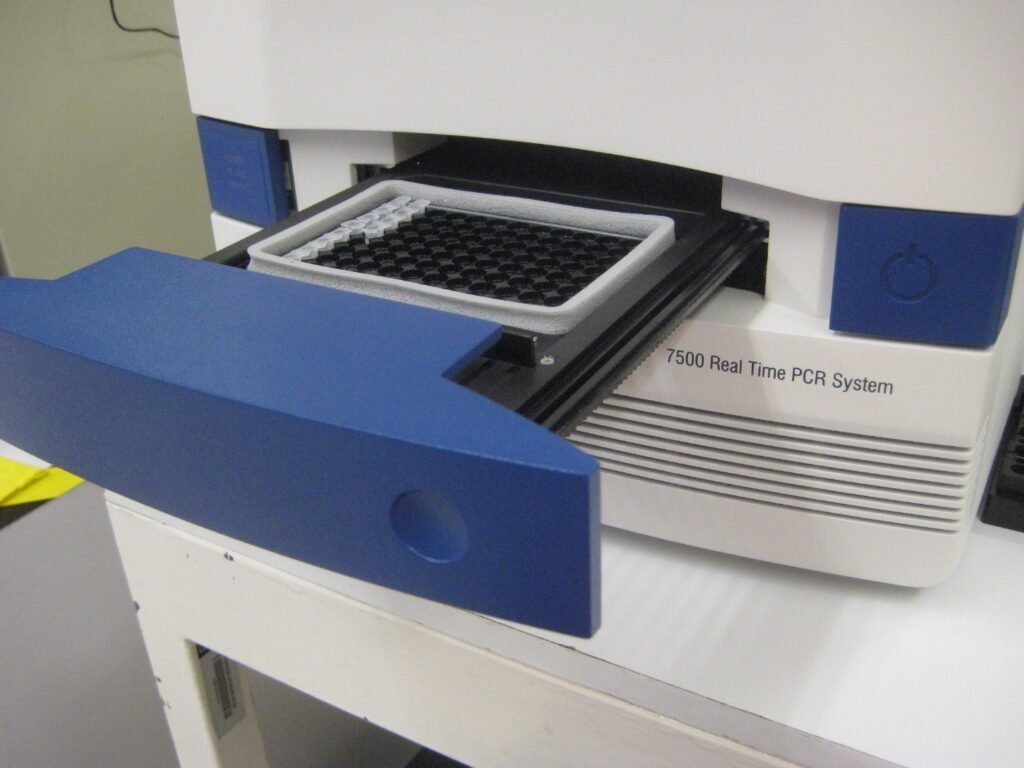
RTqPCR machine

Real time PCR thermocycler (RT-qPCR). Source: Ca.garcia.s via Wikimedia Commons.

Modern dengue RT-PCR assays do more than amplify DNA, they monitor amplification as it happens.

Fluorescent probes are designed to bind specifically to dengue virus genetic sequences. As PCR progresses and more DNA is produced, fluorescence increases with each amplification cycle.

The PCR instrument continuously measures this fluorescence and generates an amplification curve. Once the fluorescent signal rises above a predetermined threshold, the sample is considered positive for dengue viral RNA.

Many public health laboratories use multiplex assays that not only detect dengue virus but can also determine which of the four dengue virus serotypes (DENV-1 through DENV-4) is present. This information is valuable for epidemiological surveillance and outbreak investigations.

Why Timing Matters

One common misconception is that RT-PCR can diagnose dengue at any stage of illness.

In reality, the test is most useful during the first seven days after symptom onset, when viral RNA is still circulating in sufficient amounts in the bloodstream.

As the immune system begins clearing the virus, viral RNA levels decline. At that point, a patient may truly have dengue even though RT-PCR no longer detects viral genetic material.

For this reason, both the CDC and the World Health Organization recommend selecting laboratory tests according to the stage of illness. Early in infection, molecular tests such as RT-PCR are preferred. Later in disease, antibody-based tests become increasingly informative because the patient’s immune response has had time to develop.

Importantly, a positive RT-PCR result confirms a current dengue infection, whereas a negative result later in illness should always be interpreted alongside the patient’s symptoms and, when appropriate, followed by serological testing.

Why RT-PCR Matters Beyond One Patient

Although RT-PCR helps physicians diagnose individual patients, its impact extends far beyond clinical care.

Many RT-PCR assays identify the infecting dengue serotype, allowing public health laboratories to monitor which strains are circulating within a region. These data help scientists detect emerging outbreaks, track changes in virus transmission, and guide mosquito control strategies.

By combining molecular diagnostics with epidemiological surveillance, health authorities can better understand how dengue spreads and allocate resources where they are needed most.

Inside the Lab Takeaway

RT-PCR has transformed how scientists diagnose dengue because it detects the virus directly rather than waiting for the immune system to respond. From RNA extraction to real-time fluorescence detection, every step is designed to answer one question: Is dengue virus present in this sample?

But even the most advanced molecular test has limitations.

Its accuracy depends not only on laboratory technique but also on when the sample is collected. A blood sample taken during the first week of illness provides the best opportunity to detect viral RNA. After that, the virus begins to disappear from the bloodstream, and antibody-based tests become a more appropriate tool.

Understanding the biology behind RT-PCR reminds us of an important principle in infectious disease diagnostics: the best laboratory test is not simply the most advanced one, it’s the one used at the right stage of infection.

Subscribe

Stay ahead of infectious disease research. Subscribe to Pathogenos for evidence-based insights, laboratory explainers, and the latest public health updates delivered to your inbox.

vaccine hesitancy

Why Vaccine Hesitancy Persists in Latin America

A review of 56 studies reveals that vaccine hesitancy in Latin America is influenced by much more than misinformation. Trust in healthcare providers, cultural beliefs, access to vaccination services, and clear communication all shape vaccine decisions, offering valuable lessons for improving immunization coverage across the region.

Read More »
picture of a laboratory

How Immunoblotting Works: Detecting Proteins in Disease Research

Immunoblotting is a powerful laboratory technique that allows scientists to detect specific proteins involved in infection and immunity. By revealing how viruses interact with human cells, it provides critical insights that drive diagnostics, therapeutics, vaccine development, and public health research.

Read More »
dengue virus particle

Dengue in Latin America in 2026: The Latest Outbreak Updates

Dengue remains a major public health threat across Latin America in 2026. Explore the latest PAHO outbreak data, affected countries, circulating dengue serotypes, and why health officials continue to emphasize surveillance, mosquito control, and early detection to prevent future epidemics.

Read More »

Leave a Reply

Your email address will not be published. Required fields are marked *

Back To Top